Residential Spray Foam Insulation in Dallas–Fort Worth
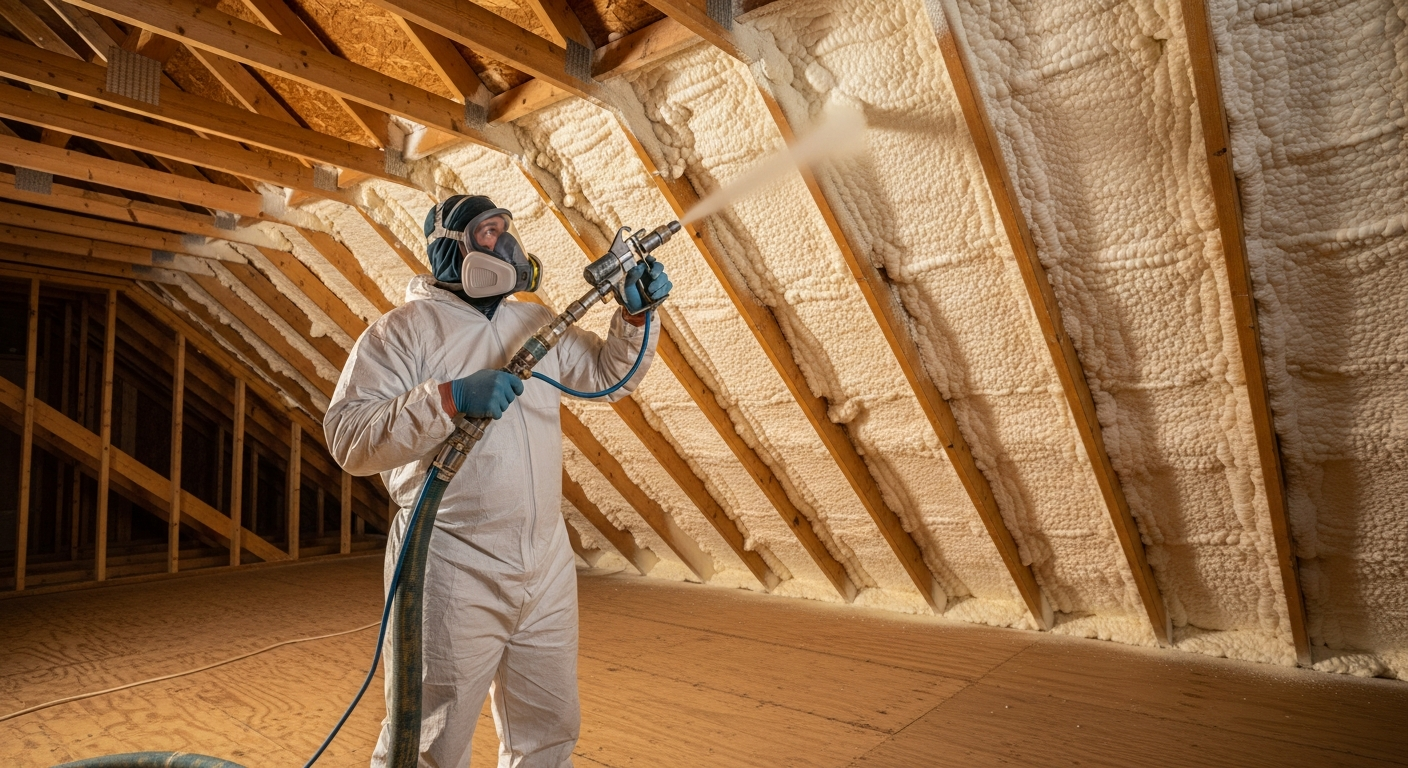
At Texas Foam Pro, residential spray foam insulation is designed around one goal: making North Texas homes dramatically more comfortable, efficient, and durable.
Most homeowners across Dallas–Fort Worth do not call us because they simply "need insulation." They call because they are living with symptoms of poor building performance.
- The upstairs is always too hot.
- The game room over the garage never feels right.
- The HVAC runs constantly in the summer.
- The attic is unbearably hot.
- Dust keeps finding its way into the home.
- Energy bills spike every July and August.
These are all signs that the home is losing performance through uncontrolled air leakage and poor thermal boundaries.
Traditional fiberglass batts only slow heat transfer. They do very little to stop moving air. In DFW, where attic temperatures can climb above 140°F during long summer stretches, that difference is enormous. Spray foam solves both problems at once by combining insulation and air sealing into one continuous system.
Texas Foam Pro specializes in residential spray foam systems for:
- existing homes
- luxury custom homes
- production homes
- remodels
- room additions
- detached guest houses
- garages with finished rooms above
- barndominiums
- high-performance new builds
Our process is never "spray first, think later." We evaluate how your home is actually built, where your HVAC equipment is located, how the attic is vented, where heat gain is occurring, and which foam chemistry creates the best long-term result.
Why DFW Homes Benefit So Much From Spray Foam
Dallas–Fort Worth homes face some of the harshest cooling demands in the country.
Long cooling seasons, intense solar heat, and hot attic spaces create constant pressure on the building envelope. In many North Texas homes, the attic becomes the single biggest source of heat load because the ductwork and air handler are installed above the ceiling.
When those ducts sit in a 140°F attic, your HVAC system loses efficiency before the conditioned air ever reaches the room.
This is why residential spray foam delivers such an outsized return in DFW homes. By controlling air movement and relocating the thermal boundary to the roofline when appropriate, we protect the HVAC system from extreme attic temperatures and dramatically improve whole-home comfort.
Homeowners typically notice:
- cooler upstairs bedrooms
- lower summer utility bills
- fewer hot and cold spots
- better humidity balance
- less dust infiltration
- quieter interior spaces
- longer HVAC equipment life
- more stable temperatures during Texas heat waves
How We Design Residential Systems
Every home is different, which is why Texas Foam Pro starts with the structure itself. Before recommending a system, we evaluate:
- 1attic type and roofline geometry
- 2location of HVAC ducts and air handler
- 3framing depth in roof and wall cavities
- 4garage-to-home transitions
- 5room-over-garage floor systems
- 6kneewalls and bonus room assemblies
- 7crawl space and rim joist leakage
- 8moisture or roof history
- 9west-facing solar load walls
- 10whether open-cell or closed-cell is the better chemistry
This allows us to build the insulation strategy around the house instead of forcing a generic package. For most asphalt-shingle homes in DFW, our preferred best practice is an unvented conditioned attic using spray foam directly on the underside of the roof deck. This brings the attic into the conditioned envelope and protects ductwork from thermal penalties.
Our Most Common Residential Applications
Texas Foam Pro installs spray foam in a wide range of residential assemblies, each with a tailored approach.
Conditioned Attic Rooflines
This is the most transformative residential service we offer. By insulating the underside of the roof deck, we move the thermal boundary from the attic floor to the roofline. This turns the attic into a semi-conditioned mechanical space instead of an extreme heat chamber. Best for: homes with attic ductwork, second-story comfort issues, large custom homes, vaulted ceilings, bonus rooms, west-facing roof exposures. This is often the single biggest comfort upgrade in a DFW home.
Exterior Wall Cavities
Spray foam in wall cavities helps stabilize temperatures and reduce outside noise. Ideal for: master bedrooms, home offices, pool-facing walls, west-facing solar walls, nursery rooms, media spaces.
Room Over Garage Comfort Fixes
One of the most common complaints we solve. These rooms absorb garage heat through the ceiling assembly below and often have leaky kneewalls nearby. Our system targets: garage ceiling cavities, transition walls, adjacent attic slopes, rim transitions, duct runs feeding the room.
Crawl Spaces + Floor Systems
For older homes and pier-and-beam structures, crawl spaces often drive humidity and comfort issues. Closed-cell foam on crawl perimeter walls and band boards helps reduce humid air intrusion and protects floor assemblies.
Open-Cell vs Closed-Cell for Residential Homes
For most DFW homes, open-cell foam is the best choice for roofline applications because it expands aggressively, fills irregular framing beautifully, and performs exceptionally well in conditioned attic systems.
We typically recommend open-cell for
- attic roof decks
- sound control walls
- large framing cavities
- luxury homes where acoustic comfort matters
Closed-cell is usually the better choice when
- framing depth is limited
- crawl spaces need vapor control
- rim joists are being sealed
- cantilever floors need maximum R-value
- moisture-prone areas exist
- detached garages need high R-value in shallow cavities
The best system depends on the assembly, not a one-size-fits-all rule.
Texas Foam Pro Best Practices
This is where real performance separates from average spray jobs. Our residential best practices include:
- full continuity at hips and valleys
- complete kneewall transitions
- sealing difficult soffit intersections
- top plate and penetration sealing
- moisture review before encapsulation
- HVAC strategy coordination
- code-aware ignition barrier planning
- precision trimming for drywall flatness
- special focus on west-facing heat loads
- attic humidity strategy when needed
The biggest mistake many installers make is focusing only on foam depth. Depth matters, but continuity matters more. A disconnected air barrier creates hidden failure points that still allow heat, moisture, and attic air to move through the structure.
Who This Page Is Perfect For
Residential spray foam is ideal for:
- homeowners with hot upstairs rooms
- luxury homeowners upgrading comfort
- remodel clients
- production builders
- custom builders
- barndominium owners
- detached office or gym spaces
- garage apartment conversions
- room additions
- buyers focused on long-term energy savings
Service Areas
Texas Foam Pro proudly serves residential clients throughout: Dallas, Fort Worth, Southlake, Grapevine, Colleyville, Keller, Westlake, Frisco, Plano, Prosper, Celina, McKinney, Denton, Arlington, Mansfield, Weatherford, Aledo and surrounding North Texas communities.
Frequently Asked Questions
Related Reading
Ready to Get Started?